A live-visuals pipeline built from parts that weren't meant to fit.
RoleSystem design & multimedia lead
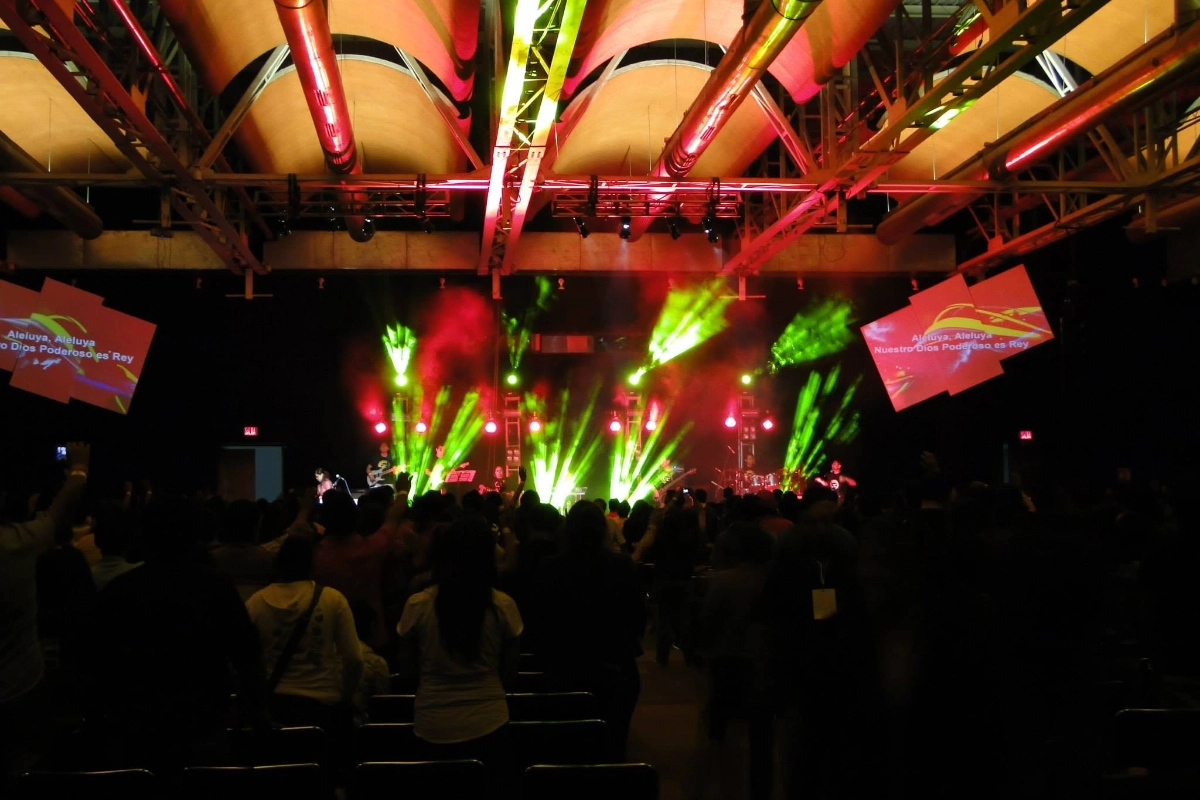
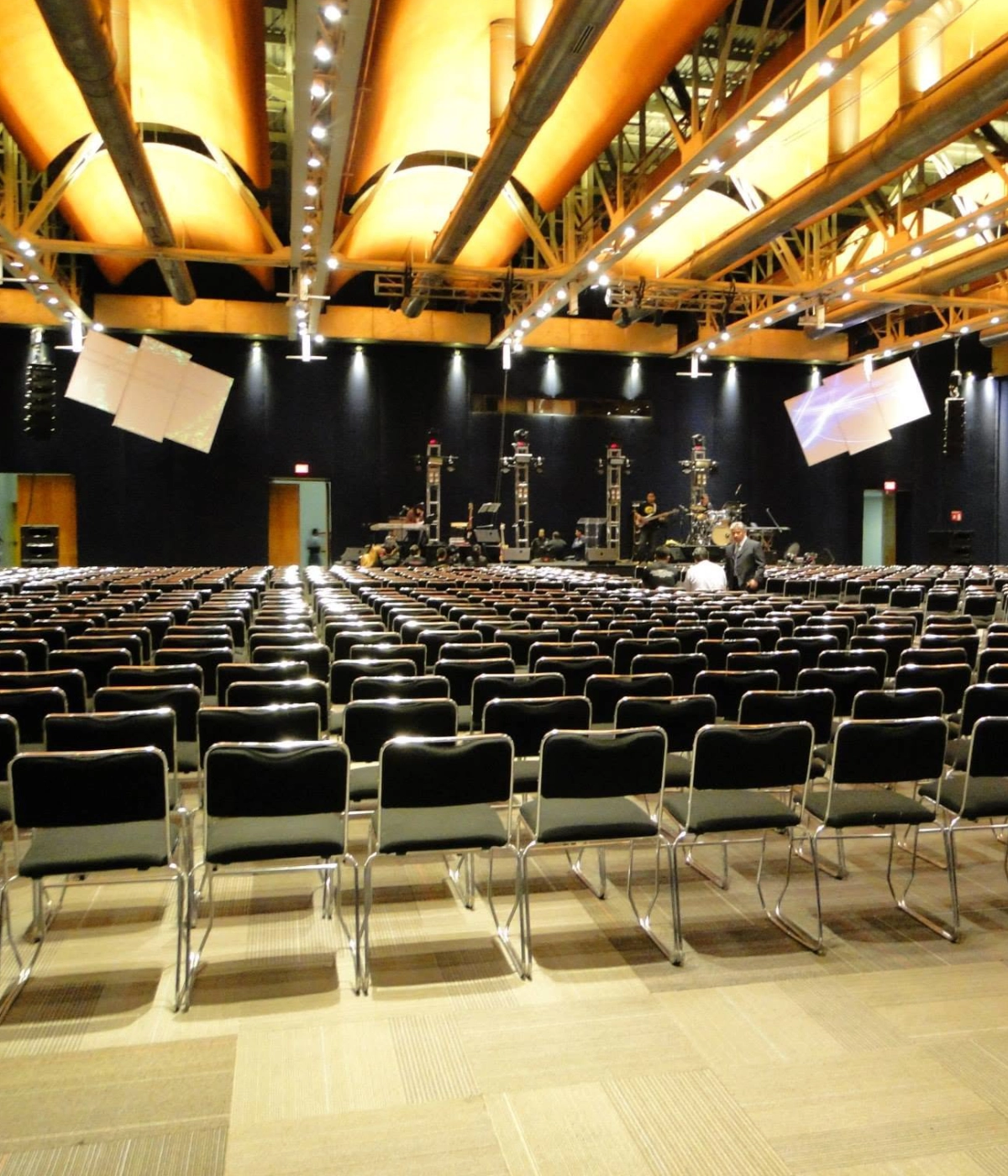
ContextNational congresses, 3,000+ attendees
Yearc. 2012
StackEasyWorship · Resolume · Syphon · live keying
The same process from "How I work" — click a stage to see it in action.
The whole system at a glance — a bridge, then a team that could run it.
01 · UnderstandLive events ran on PowerPoint — and every event was one mishap from chaos.
Three requirements no single tool met.
Large gatherings — up to national congresses with over 3,000 attendees — needed live
song lyrics and text on screen, over visuals worthy of the room. The existing setup was
PowerPoint: duplicated-screen problems, audio conflicts, one person improvising under
pressure. I had felt it first-hand when a stop-motion animation I made nearly fell
apart on playback.
The real requirement, once named: reliable live text, cinematic moving backgrounds,
and a setup that volunteers could operate with confidence.
02 · DecideNo single tool did everything — so the system would be a bridge, not a tool.
Stop tool-shopping; design the joint.
I researched the professional VJ world: Resolume and Arkaos delivered the visual power,
but were hopeless for live lyrics. The lyrics software (EasyWorship) handled text and
scripture perfectly — but ran only on Windows, while the visual pipeline lived on a
Mac. Two great tools, mutually incompatible by design.
The key call
"Stop searching for one tool that does everything. Design the bridge between two
tools that each do one thing well."
03 · BuildPC lyrics, screen-shared to a Mac, keyed over motion visuals — composited live.
The signal path, end to end.
The pipeline: EasyWorship ran the lyrics on a PC over a green background. A
screen-sharing client carried that output to the Mac, where the green was keyed out
and the clean text was composited — via Syphon, which pipes video between apps in
real time — over motion backgrounds in Resolume, mapped to the venue's screens.
The architecture had a second benefit baked in: it split the work into two clear
roles. One operator owned the lyrics; another owned the visuals and screen mapping.
No single person under pressure, no single point of failure.
04 · Make it stickA volunteer team that could run it without me.
Two roles, no single point of failure.
A system operated by volunteers only works if the volunteers are trained. I organised
and led the multimedia group, taught each role, and designed the on-screen looks for
the congresses themselves. The two-role split made onboarding fast: each person had
one job to master, not a whole pipeline to fear.
→ ResultStable live visuals for 3,000-person events — years before this job had a name.
The pattern, years before it had a name.
The hybrid pipeline ran national-level events reliably, replacing improvisation with
an operable system. Looking back, it was my first full act of what's now called
creative technology: find the gap, combine existing parts into something that didn't
exist, and hand it to people who can run it. The pattern hasn't changed since —
only the tools have.
From the archive
The project in context
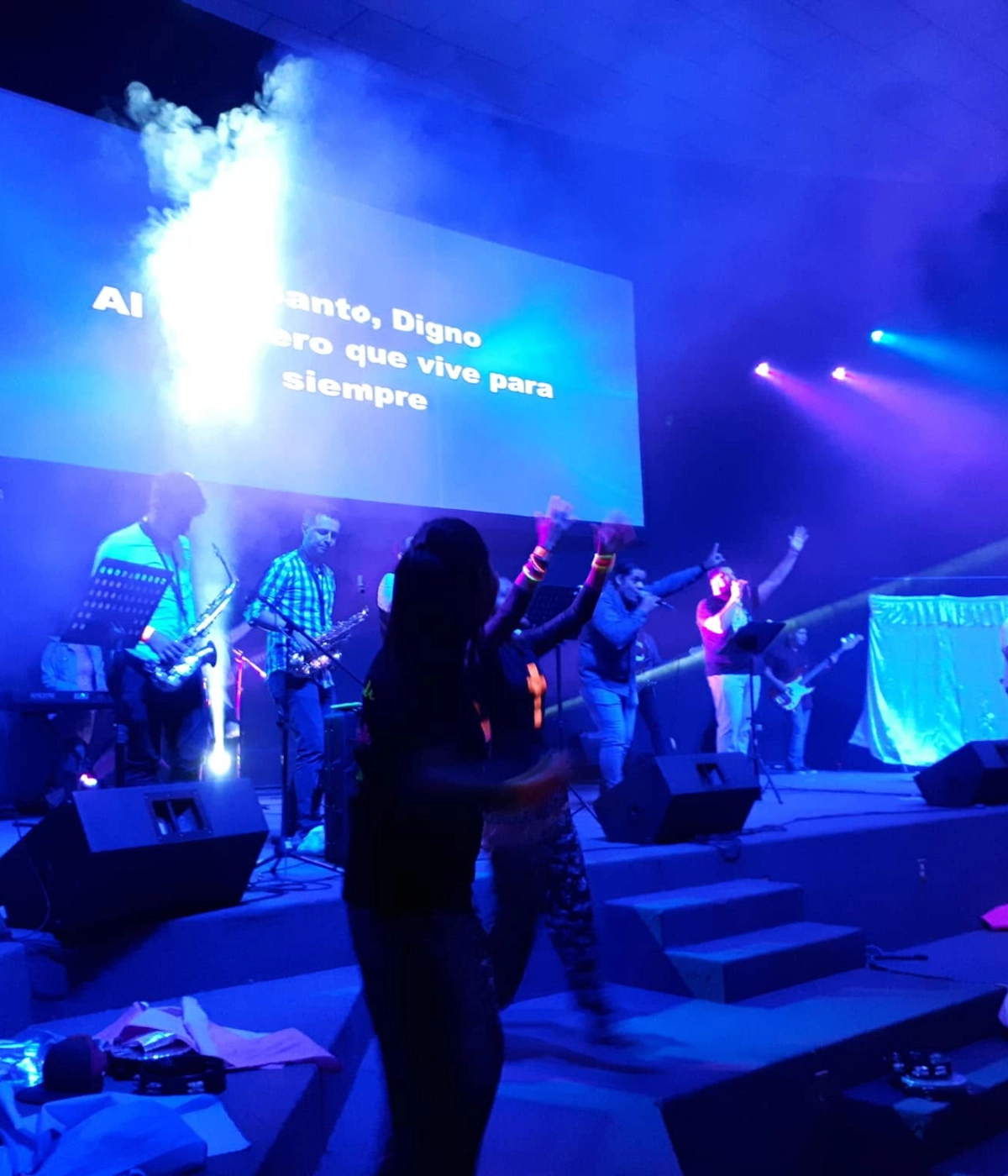
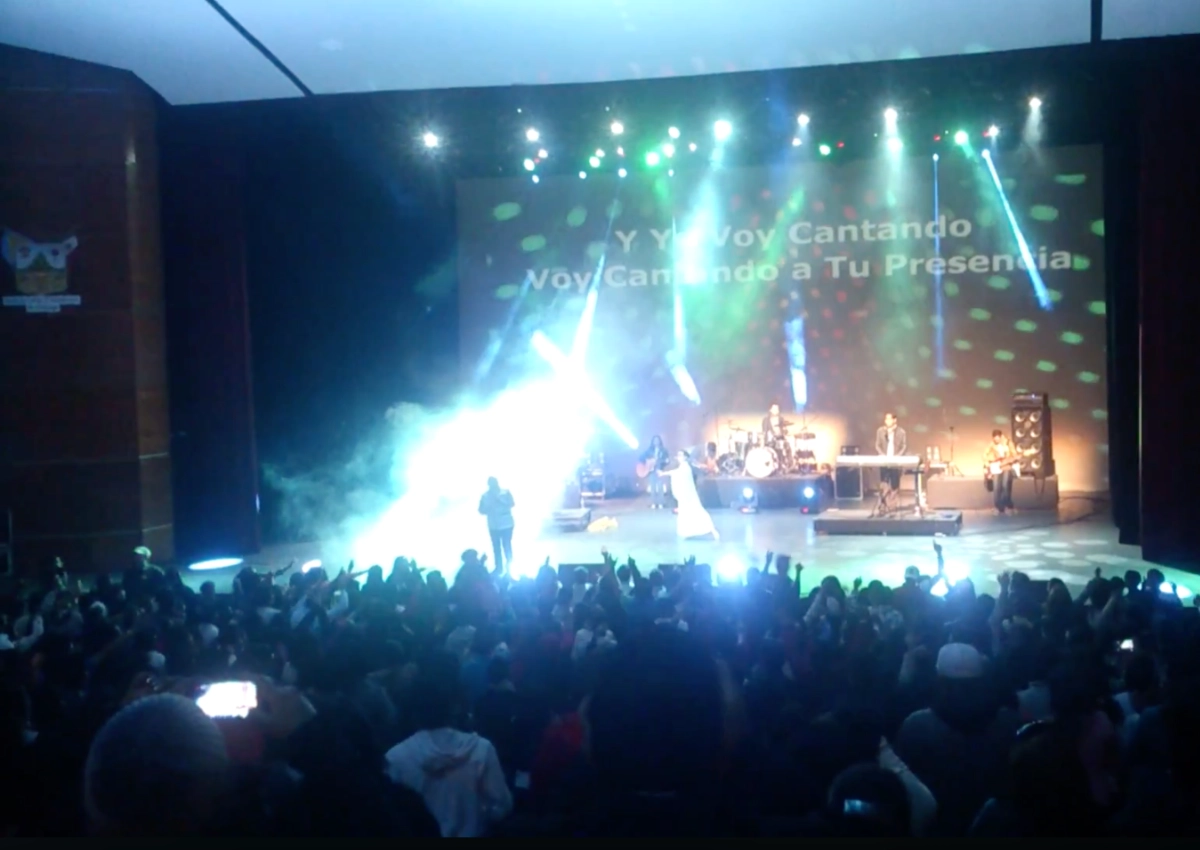
The original setup predates my photo habits — so these images document the same system, rebuilt and operated today.
The full pipeline: EasyWorship generates the lyrics on the PC — routed via VNC, piped through Syphon into Resolume, composited with motion backgrounds and projected live.
01Two separated screens, mapped — not mirrored. Lyrics over visuals, live.02An unplanned screen separation — solved on site, thanks to the system.03Three years of refinement — eventually two projectors, one wide image.04Professional mapping projectors — the providers asked how it worked.