AI language tools, in production — built for a need no existing app could see.
RoleProduct design, build & daily use
ClientMyself — preparing the Goethe C1 exam
Year2026
StackNode.js · Express · SQLite · Anthropic API · Railway
The same process from "How I work" — click a stage to see it in action.
The whole system at a glance — one question runs through everything.
01 · UnderstandDuolingo and Anki exist. I had tried them all — and they weren't built for my need.
Built for everyone usually means built for no one exactly.
Preparing an advanced German exam is a specific problem: drilling irregular verbs in
context, building vocabulary from your own exam material, training the structure of
argumentative writing. Generic apps are built for broad audiences and whole languages at once. I knew exactly
what wasn't working because I was the user — you can't see a need from the outside.
02 · DecideThe core call: what runs on deterministic code, and what earns a call to the AI model.
One question filters every feature.
AI is not the answer to everything — it's a component with a cost. So each feature had
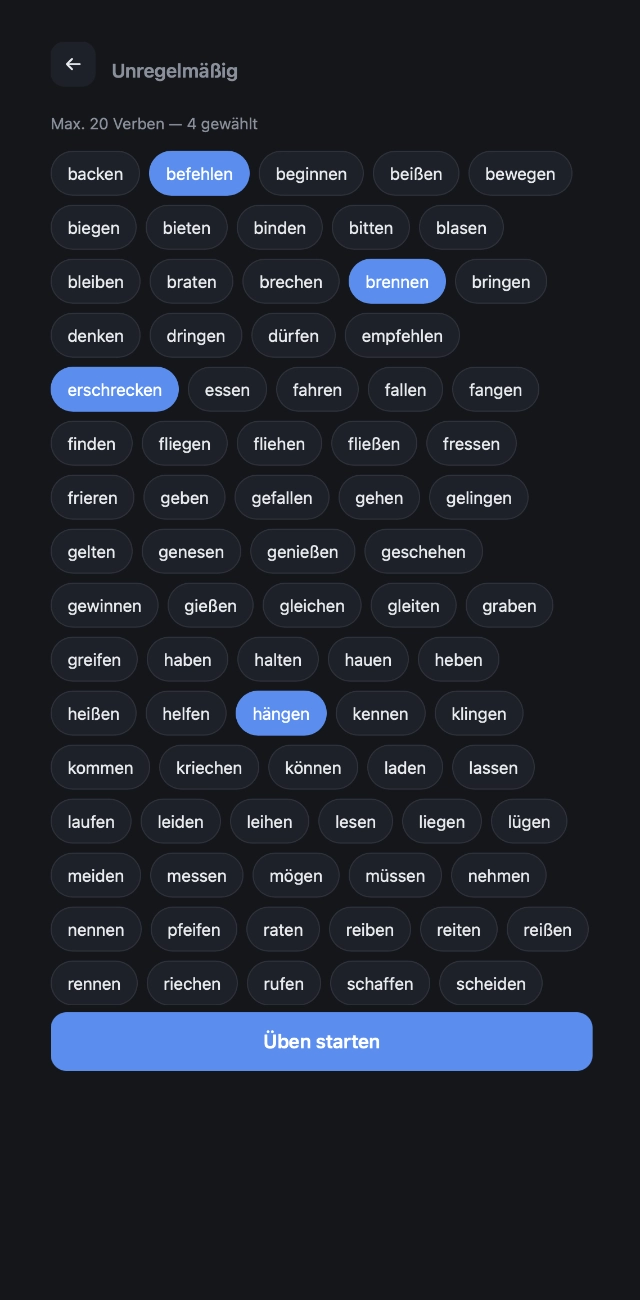
to justify its place: verb conjugations are fixed data (309 irregular verbs, preloaded,
zero API cost); spaced repetition is a solved algorithm (FSRS, deterministic); but
generating fresh, themed example sentences for the exact word you're struggling with —
that's where the model earns its keep.
The key call
"Use AI only where it creates what code can't: everything predictable runs on
deterministic logic; the model generates what has to be new."
For the interaction layer, I borrowed a proven pattern instead of inventing one:
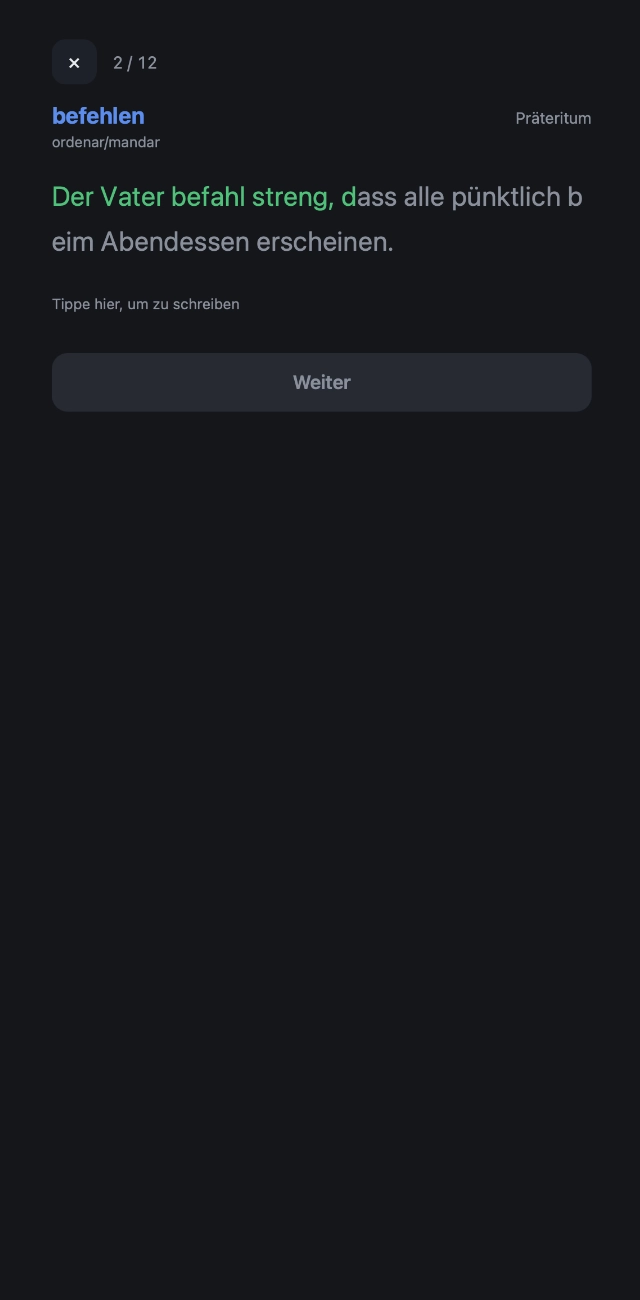
Monkeytype-style typing mechanics, because typing full sentences trains production,
not just recognition.
03 · BuildNot one app — a small family of tools sharing one architecture.
A family of tools on one architecture.
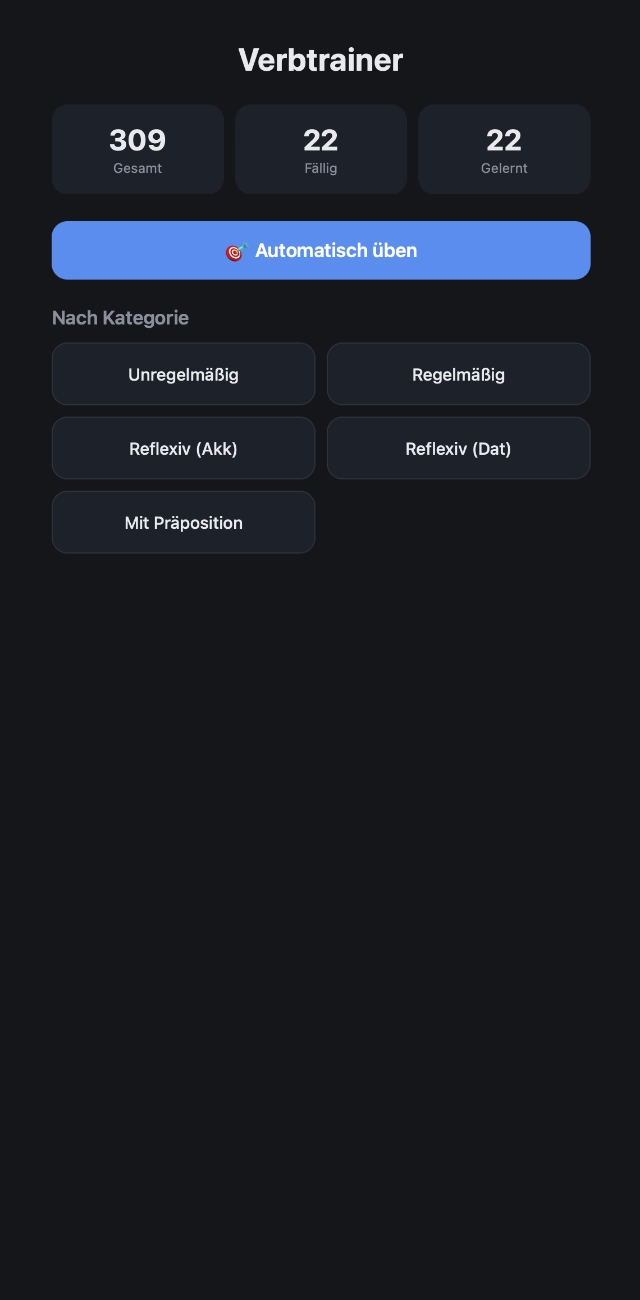
Verbtrainer: conjugation drilling for 309 irregular verbs with
AI-generated themed sentences. Satzgerüste: vocabulary with FSRS
spaced repetition and sentence typing. Plus exam-specific tools for writing practice
with official scoring criteria and timers. All on the same stack — Node.js, Express,
SQLite, deployed on Railway with API keys server-side — so every new tool ships
faster than the last.
04 · Make it stickI'm user number one — and the feedback loop is daily.
User number one, every single day.
Adoption here means something stricter than downloads: a tool either survives my own
daily study sessions or it gets rebuilt. Features that looked clever but didn't help
retention were cut; the friction I felt at 7 a.m. became that evening's fix. It's the
tightest user-feedback loop possible — and the same discipline I'd bring to anyone
else's product.
→ ResultTools in production — trusted with my own C1 exam.
The honest measure of the system.
The tools run live today and carried my preparation from B2 toward the Goethe C1.
That's the honest measure of this system: I trusted my own exam to it. And the
architecture beneath it — knowing precisely when AI adds value and when plain code
does the job better — is the judgment companies are hiring for in 2026.
Try it
The tools, in hand
One screen is a screenshot; the other one works. The mini-demo below uses
the real typing engine with two pre-written sentences — no AI calls, just the feel of
the actual app.
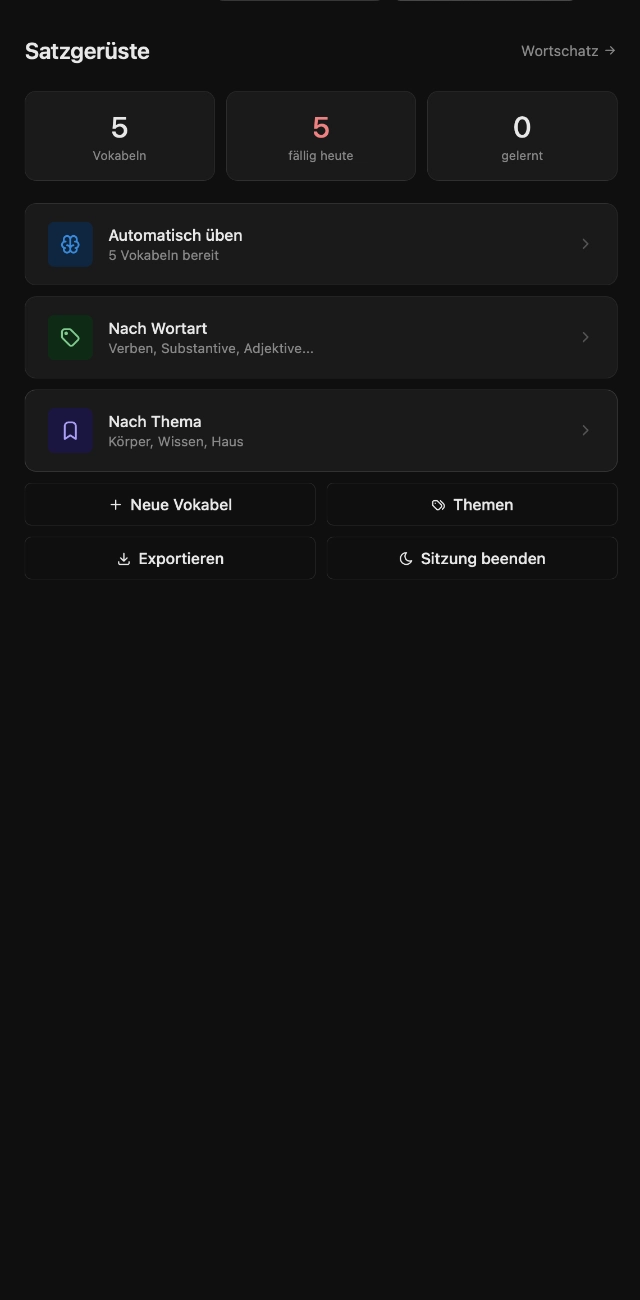
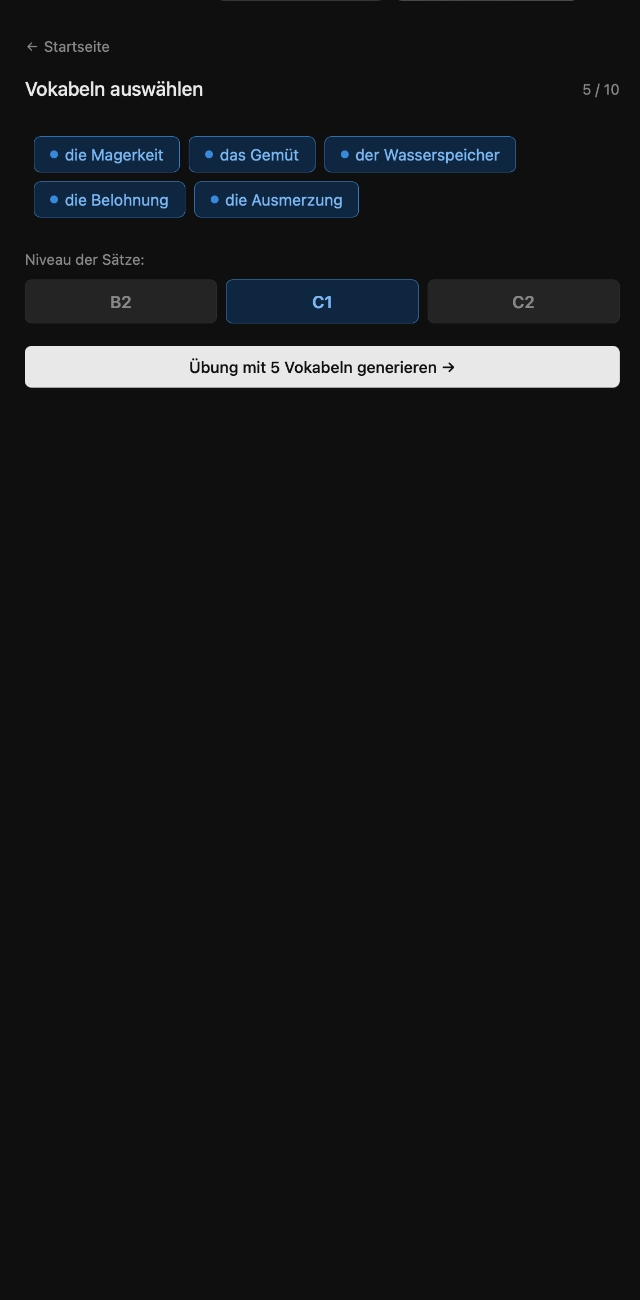
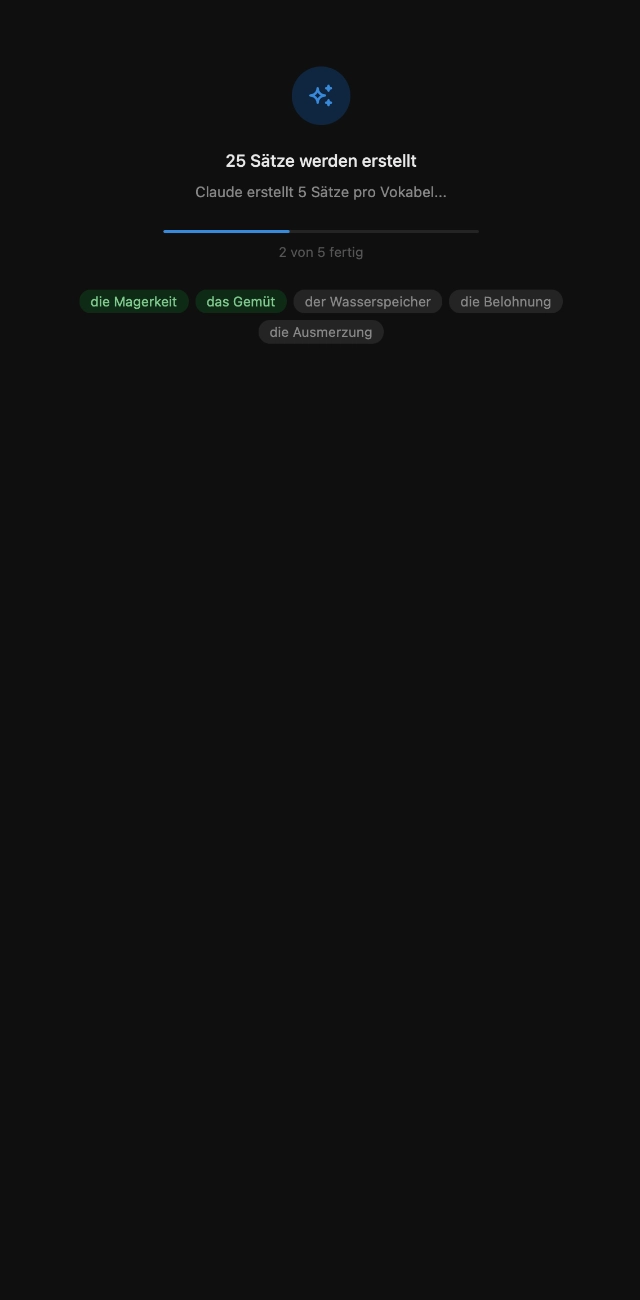
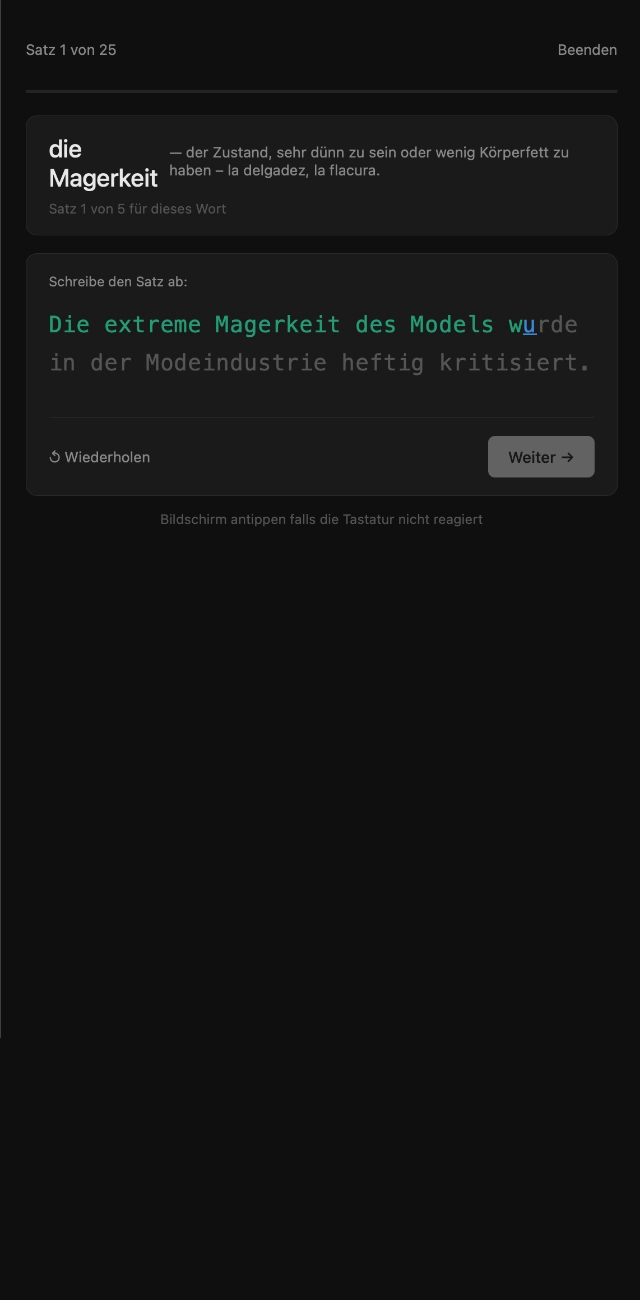
App 01 Satzgerüste — vocabulary, in context
01Home — study on autopilot, or add new words.
02Picking the words for a session, level included.
03The wait — sentences being generated.
04Typing the sentence — German definition, short Spanish gloss.
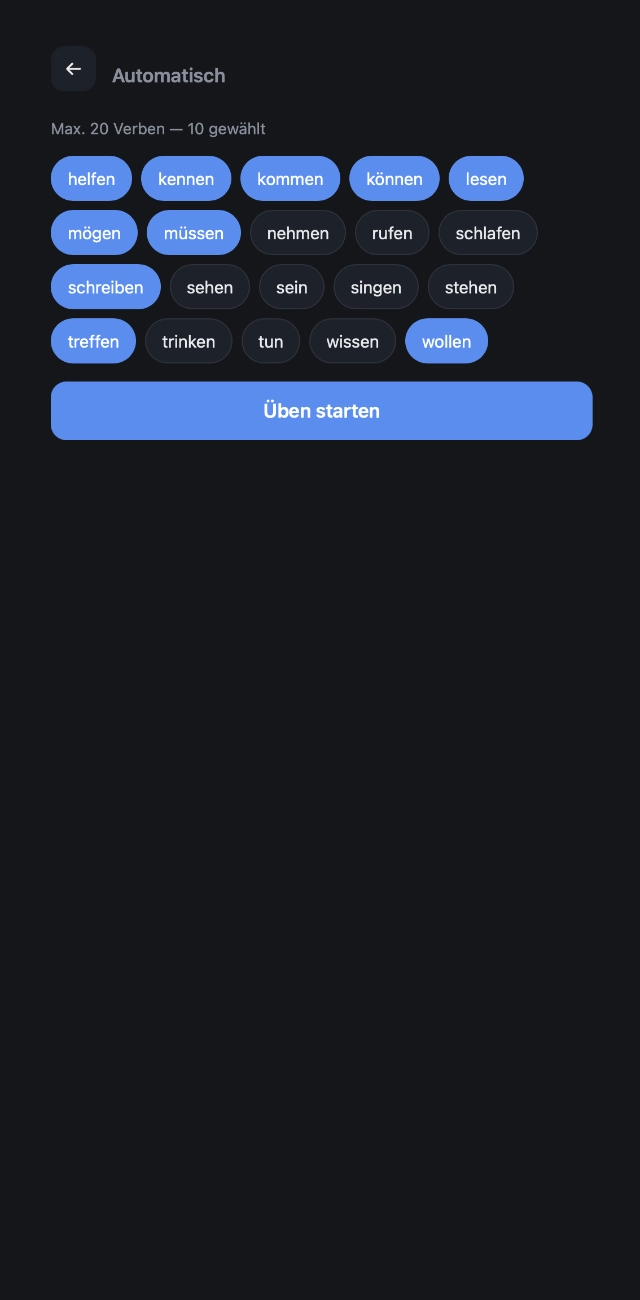
App 02 Verbtrainer — irregular verbs, drilled
01Home — choosing a learning mode.
02Automatic session — skip the words you don't need.